

A hydrometer is an essential laboratory instrument designed to measure the density or specific gravity of liquids accurately and efficiently. Rather than requiring separate calculations of mass and volume, a hydrometer provides direct measurements of relative density, making it a valuable tool in scientific, industrial, and quality control environments.
Measuring density is crucial in chemistry, food and beverage production, pharmaceuticals, and environmental analysis to monitor purity, concentration, and process consistency.
In this article, we explain what a hydrometer is, how it works, the main types available, and common laboratory applications.
What Is a Hydrometer?
A hydrometer is an analytical instrument used to determine the relative density of a liquid, often relative to water, without requiring manual mass and volume calculations.
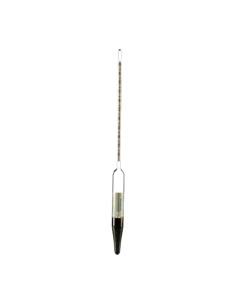
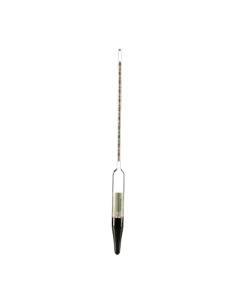
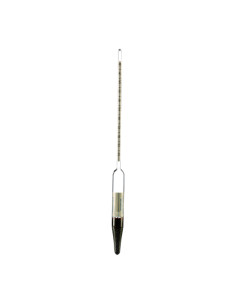
Traditional hydrometers are made of glass and feature a long tube with a weighted bulb at the bottom and a graduated scale along the stem indicating density or specific gravity values.
More advanced versions may incorporate electronic sensors or vibrating elements, allowing fast, precise digital readings and features such as automatic temperature compensation.
Operating Principles
Archimedes’ Principle
The classic hydrometer operates based on Archimedes’ principle of buoyancy, which states that an object submerged in a fluid experiences an upward force equal to the weight of the fluid displaced.
When the hydrometer floats in a liquid, the depth at which it stabilizes is directly related to the liquid’s density. The denser the liquid, the higher the hydrometer floats. The measurement is read directly from the scale on the stem at the liquid’s meniscus.
Advanced Sensor Techniques
Some modern laboratory hydrometers and density meters use oscillating tubes or vibrating elements to determine density based on changes in vibration frequency when a sample fills a known chamber. These methods provide high precision and are widely used in industrial and research laboratories.
Types of Hydrometers
Glass hydrometer type
Traditional and mechanical instruments that rely on buoyancy and a graduated scale. They are simple to use and widely applied in routine laboratory measurements.
Digital hydrometers
Provide digital readings, automatic temperature compensation, and data storage, making them suitable for quality control and regulated environments.
Oscillating or U-tube density instruments
Measure density by detecting changes in the natural frequency of a vibrating tube filled with the sample. These systems offer very high accuracy and reproducibility.
Laboratory and Industrial Applications
Hydrometers are used in many fields, including:
- Quality control of chemical reagents and liquid solutions
- Food and beverage analysis to determine sugar content, alcohol concentration, and purity
- Pharmaceutical production to ensure consistency in liquid formulations
- Environmental testing to characterize liquid samples and verify regulatory compliance
Materials and Accessories for Hydrometer Use
Common laboratory items used alongside hydrometers include:
- Calibration standards with known density values
- Thermostatic baths to maintain the sample at a constant temperature
- Beakers or graduated cylinders
- Temperature probes or laboratory thermometers
- Data logging systems for electronic instruments
Step-by-Step Usage Overview
- Prepare the sample: Remove air bubbles and ensure the liquid is at the correct temperature.
- Insert the instrument: Lower the hydrometer carefully until it floats freely and vertically.
- Read the scale or digital output: Observe where the liquid level stabilizes on the scale or record the digital reading.
- Record and adjust: Apply temperature correction if required by the instrument specifications.
Best Practices and Considerations
- Always operate the hydrometer at its designated reference temperature, as density varies with temperature.
- Select the hydrometer type and measurement range appropriate for the liquid being tested.
- Calibrate the instrument regularly using certified standards to ensure measurement accuracy.
Conclusion
A hydrometer is a vital tool for measuring liquid density with precision and reliability. Whether using classical glass hydrometers or advanced digital systems, selecting the appropriate instrument and following correct measurement procedures ensures accurate results. These measurements play a key role in quality control, product development, and scientific research across multiple industries.
Related products