LABORATORY GLASS BOTTLES
Laboratory glass bottles
Laboratory glass bottles are essential containers for storing, preparing and handling reagents, solutions and samples. Although plastic bottles are widely used in modern laboratories, glass remains particularly valuable when chemical resistance, thermal stability, transparency and sample integrity are important.
The characteristics of a glass bottle depend largely on the type of glass from which it is manufactured. Selecting the appropriate material is therefore essential, as temperature, chemical compatibility and storage conditions can all influence the performance of the container and the stability of its contents.
Types of glass used in laboratory bottles
Not all laboratory glass has the same properties. Two of the most commonly used materials for glass laboratory bottles are borosilicate glass and soda-lime glass.
Borosilicate glass
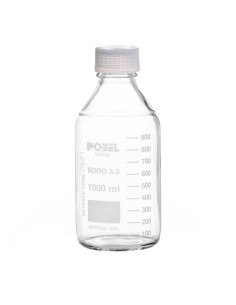
Borosilicate glass bottles are widely used in laboratories because of their excellent resistance to thermal shock and high resistance to many chemicals. Their low coefficient of thermal expansion allows them to tolerate temperature changes significantly better than conventional soda-lime glass.
Borosilicate glass is particularly suitable for applications involving:
- the storage and preparation of laboratory reagents and solutions;
- heating or cooling processes where temperature changes may occur;
- many acids, saline solutions and organic substances;
- sterilisation and other demanding laboratory procedures, where permitted by the specific bottle design.
This combination of thermal stability and chemical resistance explains why borosilicate 3.3 is extensively used in laboratory bottles and vials and other professional laboratory glassware.
Soda-lime glass
Soda-lime glass bottles provide a practical alternative for applications that do not require the same degree of thermal resistance as borosilicate glass.
Soda-lime glass has a higher coefficient of thermal expansion and generally lower resistance to thermal shock. It is therefore better suited to applications such as:
- general sample storage;
- storage of powders and compatible solutions;
- applications without sudden temperature changes;
- routine laboratory use where high thermal resistance is not required.
The correct choice between borosilicate and soda-lime glass should always be based on the substance being stored and the thermal and chemical conditions of the application.
Why use glass bottles in the laboratory?
Glass lab bottles offer several advantages for storing and handling chemicals, samples and prepared solutions.
Chemical resistance
Borosilicate glass offers high resistance to water, many acids, saline solutions, organic substances and numerous laboratory chemicals. This helps minimise interaction between the container and its contents and makes glass particularly useful where sample purity is important.
However, no material is universally resistant to every chemical. Hydrofluoric acid, hot concentrated phosphoric acid and strong alkaline solutions at elevated temperatures can attack borosilicate glass, so chemical compatibility should always be checked for demanding applications.
Thermal resistance
The low thermal expansion of borosilicate glass makes it suitable for laboratory procedures involving temperature changes. This is particularly important when bottles are used during solution preparation, sterilisation or other processes where thermal stress could damage conventional glass.
Transparency
Clear glass allows the contents of a bottle to be inspected without opening the container. This makes it easier to observe colour changes, precipitation, contamination or the remaining volume of a reagent or solution.
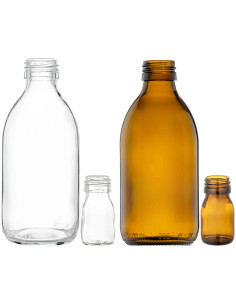
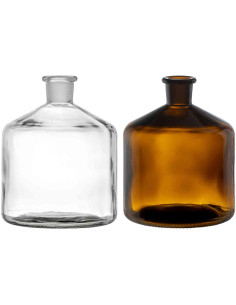
Protection from light: amber glass bottles
Not every substance should be stored in a clear container. Some reagents and samples are photosensitive and can degrade or change when exposed to ultraviolet or visible light.
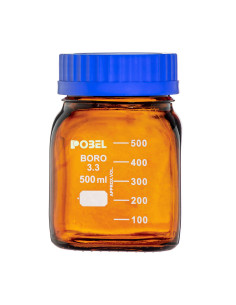
In these cases, amber glass provides additional protection by reducing the amount of potentially damaging light reaching the contents.
For photosensitive substances, Pobel offers a specific range of amber laboratory bottles designed for applications where protection from light is an important storage requirement.
The choice between clear and amber glass should therefore depend on the light sensitivity of the reagent, solution or sample being stored.
Common uses of laboratory glass bottles
Laboratory glass bottles can be used across research, analytical, industrial, pharmaceutical, educational and quality-control laboratories.
Common applications include:
- storing reagents and prepared solutions;
- sample collection and storage;
- preparing buffers and laboratory media;
- storing solids and powders;
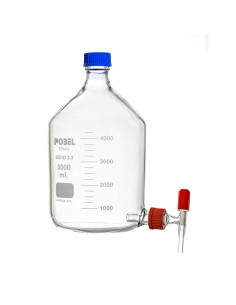
- supplying reagents to laboratory equipment;
- biochemical and environmental analysis;
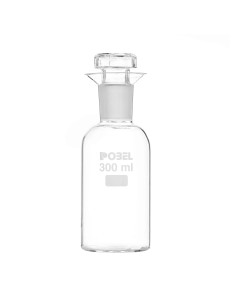
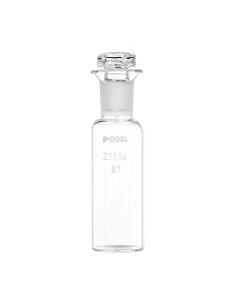
- specialised applications requiring BOD or Winkler bottles.
The appropriate bottle design depends not only on the material, but also on factors such as capacity, neck diameter, closure system and whether a standardised laboratory thread is required.
Bottle necks, threads and closures
The closure is an important part of any laboratory storage system. A suitable cap or stopper helps protect the contents against contamination, evaporation and accidental leakage.
Laboratory glass bottles may use different closure systems, including ground-glass mouths, DIN threads and standard GL screw threads. The correct option depends on the intended application and the accessories or laboratory equipment with which the bottle will be used.
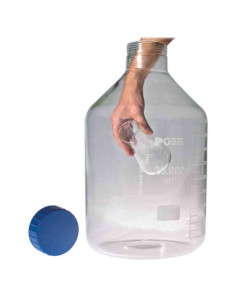
Wide-mouth bottles can simplify filling, emptying and access to solids or viscous materials, while narrower openings generally provide greater control when pouring liquids.
Cleaning, inspection and safe use
Correct maintenance helps extend the useful life of glass laboratory bottles and reduces the risk of contamination or breakage.
Cleaning
Bottles should be cleaned thoroughly after use using a procedure compatible with both the glass and the substances that have been contained in them. Residues can contaminate subsequent samples or interfere with analytical results.
The same principle applies to other reusable laboratory glassware, including laboratory glass beakers.
Inspection
Glass bottles should be visually inspected before use. Cracks, chips or other damage can weaken the container and increase the risk of failure, particularly when the bottle is exposed to temperature changes or mechanical stress.
Storage
Bottles should be stored securely and in accordance with the requirements of their contents. Suitable labelling, compatible closures and appropriate separation of incompatible chemicals are essential parts of safe laboratory storage.
When liquids need to be removed from storage bottles accurately and repeatedly, graduated pipettes or laboratory dispensers can provide better control than pouring directly from the container.
How to choose the right laboratory glass bottle
Before selecting a glass bottle for laboratory use, consider:
- whether borosilicate or soda-lime glass is more suitable;
- the chemical compatibility of the glass and closure with the contents;
- whether the substance is sensitive to light;
- the required capacity;
- the expected working and storage temperatures;
- whether sterilisation or autoclaving is required;
- the preferred neck diameter;
- the required thread, stopper or closure system;
- and whether the bottle needs to connect to other laboratory equipment.
Choosing the correct combination of glass type, bottle design and closure helps maintain sample integrity while improving safety and reliability in routine laboratory work.
Laboratory glass bottles from Pobel
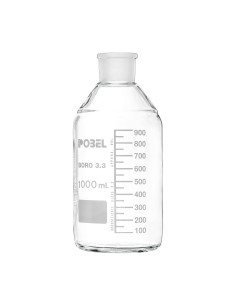
Pobel offers laboratory glass bottles for a wide range of professional applications, including borosilicate and soda-lime glass bottles, cylindrical bottles, ISO laboratory bottles, dropper bottles, BOD bottles, Winkler bottles and reservoir bottles.
The most suitable bottle will depend on the substance being stored, the temperature conditions, the required chemical resistance and the way in which the container will be used.
If you need help choosing the appropriate glass bottle for your laboratory, contact us for technical advice.