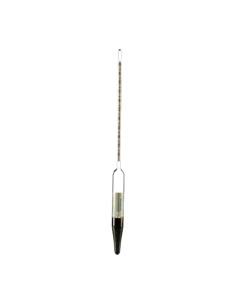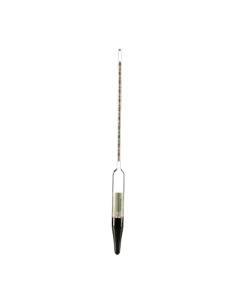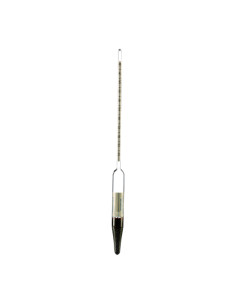


The hydrometer is an essential instrument used to determine the relative density of liquids across a wide range of industries, including chemical laboratories, food and beverage production, pharmaceutical manufacturing, petroleum refining, and environmental monitoring. However, to ensure that its readings are reliable and consistent, the instrument must be properly calibrated.
Calibrating a hydrometer ensures that the readings accurately reflect real density values without systematic errors. This is vital for precise analysis and is often required in laboratories operating under ISO standards or Good Laboratory Practices (GLP).
This article details how to calibrate a hydrometer step-by-step, the materials you’ll need, practical tips, and how often calibration should be performed.
What Does It Mean to Calibrate a Hydrometer?
Calibration involves comparing the hydrometer’s readings against a certified reference liquid with a known density. For traditional glass hydrometers, calibration is typically a verification process without physical adjustment. Digital models may allow for internal or software-based adjustments.
When Should a Hydrometer Be Calibrated?
Recommended times to calibrate your hydrometer include:
-
Upon receiving a new hydrometer
-
After impacts or drops
-
If suspicious or inconsistent readings are observed
-
At regular intervals, per lab or manufacturer policy
-
Before critical measurements or audits
Materials Needed for Calibration
To perform a proper calibration, gather the following items:
-
Hydrometer to be calibrated (traditional glass or digital)
-
Certified reference liquids with known density
-
Clear graduated cylinder or test jar
-
Certified thermometer
-
Temperature-controlled bath or a stable room temperature
-
Lint-free drying cloth
-
Temperature correction tables, if necessary
Step-by-Step Calibration Procedure
1. Inspect the Hydrometer
-
Ensure the hydrometer is clean and dry.
-
Check for cracks, internal air bubbles, or scale damage.
2. Prepare the Reference Liquid
-
Select a reference liquid appropriate for your hydrometer’s range.
-
Adjust the liquid to the reference temperature (typically 20 °C or 15.56 °C).
-
Fill the graduated cylinder to a level that allows free floating of the hydrometer.
3. Insert the Hydrometer
-
Lower the hydrometer gently into the liquid.
-
Avoid contact with the walls of the container.
-
Allow it to float freely and stabilize.
4. Take the Reading
-
Align your eye with the meniscus level.
-
Record the point where the liquid’s surface intersects the scale.
-
Use a certified thermometer to log the liquid’s temperature.
5. Compare the Reading with Reference
-
Look up the certified density value for the reference liquid at the measured temperature.
-
Compare it to your hydrometer’s reading.
-
If using a digital hydrometer, adjust if needed. For analog models, note the deviation.
Best Practices and Recommendations
-
Use only certified reference solutions, handled and stored correctly.
-
Repeat the process multiple times to ensure accuracy and repeatability.
-
Rinse and dry the hydrometer with distilled water after each use.
-
Store the hydrometer in a protective case to prevent damage.
What If the Hydrometer Is Out of Tolerance?
For traditional hydrometers, you cannot adjust the instrument. Instead, record the observed error and account for it during future measurements.
Some digital models allow calibration at multiple points using built-in software tools and certified standards.
Why Proper Calibration Matters
Improper calibration may result in:
-
Inaccurate concentration or purity readings
-
Quality control issues
-
Misinterpretation of scientific data
Proper calibration:
-
Increases data reliability
-
Ensures compliance with GLP or ISO standards
-
Prevents costly production or research errors
Conclusion
Calibrating a hydrometer is more than a routine task—it’s a critical component of laboratory quality assurance. By following a structured procedure, using the right tools, and maintaining the instrument, you ensure your measurements are consistently accurate and scientifically valid.
Related products