Sign in

+34 91 380 33 18

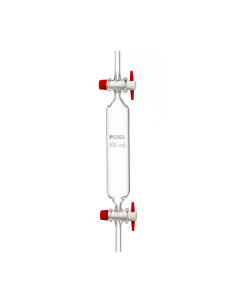
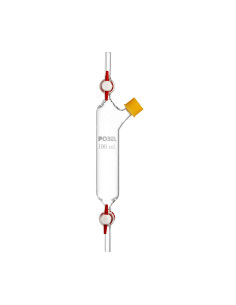
GAS COLLECTING TUBES


Gas collectors in the laboratory

When you’re in the middle of an experiment, you know that handling substances in a non-liquid state requires millimetre-level precision and absolute safety. Working with volatile fluids or reactions that release vapours calls for specific instruments that ensure nothing escapes into the atmosphere.

In this context, properly integrating gas collectors into your experimental setup is essential to ensure your measurements are accurate and—above all—that your working environment remains under control. It’s not just about capturing a substance, but doing so with the right methodology so that subsequent analysis is viable and reproducible.

The importance of efficient capture in your processes

You’ve probably faced the challenge of isolating a gaseous product derived from a complex reaction more than once. The efficiency of this step depends on how airtight your system is. To achieve this, you must pay close attention to the quality of your connections: using stoppers and seals with high chemical resistance is vital to prevent leaks that could invalidate hours of prior work.

In addition, when working with systems that require a controlled atmosphere, you often need to evacuate the air before collection. In these cases, having reliable vacuum equipment will allow you to purge the system with the confidence that the collected gas will be pure. Combining these elements creates a working ecosystem where precision is the rule, not the exception.

Types of devices for managing gaseous substances

Depending on the nature of the gas and its solubility, you’ll need to choose the most appropriate capture method for your scientific research:

  • Water displacement: ideal for gases that are not soluble in water, allowing you to directly visualize the collected volume.

  • Gas syringe collection: perfect when you need precise aliquots for subsequent chromatographic analyses.

  • Manifold systems or vacuum lines: used in advanced synthesis where multiple samples must be handled simultaneously under nitrogen and vacuum conditions.

Integrating gas collectors with volumetric glassware

Once you’ve captured the substance, the next logical step is quantification. This is where your skill with volumetric apparatus comes into play. Although we’re talking about gases, these often need to be bubbled through solutions to be analysed via volumetric methods or titrations.

If your protocol involves titrating a solution that has absorbed the collected gas, using burettes with reservoirs will be essential to carry out the titration with maximum accuracy. Likewise, for preparing the receiving solutions, using volumetric flasks ensures that the starting concentration is exactly what your analytical method requires.

Synergies with purification and distillation processes

In many cases, gas generation occurs during thermal purification. If you’re operating glass distillation units, you’ll notice that managing volatile fractions is inseparable from the process. Vapours that do not condense in condensers must be directed to capture systems to prevent dispersion into the fume hood.

Even in extractor setups, controlling internal pressures and the potential release of saturated vapours makes the use of these collection systems a measure of safety and technical efficiency. If you need advice to configure a complex system combining distillation and volatile capture, you can contact us at any time via our Contact Us form.

Handling liquids and reagents in gas generation

Controlled gas generation often begins with the precise addition of a liquid reagent onto a solid or another solution. To prevent the reaction from becoming violent and to keep the gas flow constant, you should use liquid-handling tools that give you full control:

  • Dropwise dosing: using dispensers coupled to the reactor helps maintain perfect stoichiometry without opening the system to the outside.

  • Microvolume transfer: when working at small scale, single-channel micropipettes are your best allies for adding catalysts that trigger production of the desired gas.

  • Safe addition: using addition and separatory funnels with a Teflon stopcock lets you regulate reagent entry while maintaining the internal pressure of the collector.

Safety and system monitoring

Working with gas collectors always involves monitoring pressure. Excess accumulation in a closed glass system could be dangerous. For this reason, integrating measurement devices and pressure control instruments is a step you should never skip in your safety protocol.

If your experiment is prolonged, you may need to store gaseous samples temporarily. Make sure your bottles and vials have gas-specific closures that prevent diffusion through the stopper. The quality of materials—like those we use at Pobel—ensures permeability is minimal.

The role of gas collectors in modern research

Today, gas capture is vital in environmental studies and renewable energy research, such as hydrogen production in chemical reactors. Your ability to capture every millilitre produced will determine the theoretical yield of your research.

To ensure your setup is flawless, we recommend always checking the compatibility of ground-glass adapters. A poorly fitted connection is the main cause of loss in gas collectors, compromising not only results but also laboratory safety when dealing with harmful gases.

Your technology partner in scientific instrumentation

At Pobel, we understand that your laboratory work is the foundation of meaningful advances. That’s why we don’t just offer the best laboratory glass beakers or plastic graduated cylinders for your day-to-day tasks—we also specialize in complex solutions for handling fluids and gases.

If you’re designing a new protocol or need to replace critical components in your gas lines, our team of experts is available to offer the technical solution that best fits your needs. The precision of your results is our top priority.

Do you have questions about what type of collection system you need for your next project, or would you like to learn more about our catalogue of specialized technical glassware?

Click here and get in touch with Pobel to receive personalized, professional advice.

Product added to wishlist
Product added to compare.