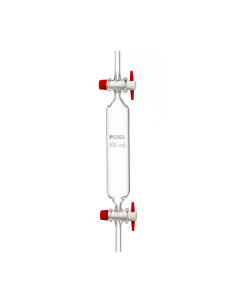
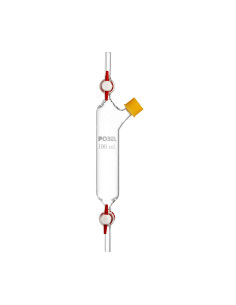
Many laboratory processes generate gases—ranging from acid–base reactions releasing CO₂ to organic syntheses producing vapors or workflows requiring displacement of air inside a system. In such cases, having a reliable way to collect, route, or retain gases is critical for safety, emission control, and, when needed, further analysis.
Laboratory gas collectors refer to a variety of devices and setups intended to capture gas produced in a reaction and transfer it into a suitable container. Depending on the gas type, volume, and purpose (storage, measurement, washing, drying, or simple routing), laboratories may use classical methods such as water displacement, air displacement, flexible sampling bags, or gas lines with washing/drying traps.
This article explains what gas collectors are, common laboratory collection methods, typical components, applications, and safety recommendations.
What is a laboratory gas collector?
A gas collector is a system designed to:
-
Capture gas produced during a reaction
-
Prevent uncontrolled release into the environment
-
Route gas to a storage or measurement container
-
Treat gas (wash or dry) before storage or analysis
In practice, “gas collector” may refer to a dedicated device (e.g., collection bag) or a complete gas collection setup (generator flask, tubing, traps, and collection vessel).
What are gas collectors used for?
Gas collectors are used to:
-
Collect gases generated in chemical reactions
-
Measure gas volume produced
-
Reduce exposure to irritating or toxic gases
-
Route gas to washing/neutralization systems
-
Create specific atmospheres (e.g., purge oxygen with inert gas)
-
Take samples for analytical measurements
Collection principles
Method selection depends on gas properties:
-
Solubility in water
-
Reactivity with water or air
-
Density relative to air
-
Need for dry vs humid gas
-
Required purity and volume
Common approaches include:
Types of laboratory gas collection methods
Water displacement collection
A classic method:
-
Fill a graduated cylinder with water
-
Invert it in a water trough
-
Feed gas through tubing into the cylinder
-
Gas displaces water and is trapped at the top
Used for gases that are poorly soluble in water and do not react with it.
Air displacement collection
Used when water displacement is not suitable or when moisture must be avoided.
Two typical cases:
Flexible collection bags or containers
Used in sampling and transport applications, especially when gas must be moved or connected to analytical instruments.
Gas washing and drying lines (trap systems)
When gas contains impurities (moisture, acidic vapors), it can be routed through:
-
Gas washing bottles for absorption/neutralization
-
Drying traps to remove water vapor
-
Check valves to avoid backflow
Typical setup components
A standard collection system may include:
-
Generator flask (gas production)
-
Stopper/adapter with gas outlet
-
Connecting tubing
-
Safety trap (to prevent liquid backflow)
-
Washing bottle or drying trap if needed
-
Collection vessel (inverted cylinder, bag, bottle)
Material compatibility and leak-tight connections are crucial.
General procedure
-
Assemble the setup and check for leaks.
-
Choose the appropriate method (water, air, bag, traps).
-
Start gas generation under controlled conditions.
-
Route gas steadily into the collector.
-
Record volume if using graduated vessels.
-
Stop reaction safely and depressurize.
-
Neutralize residual gas if necessary.
-
Clean and maintain equipment according to SOP.
Safety recommendations
-
Work in a fume hood for toxic or irritating gases.
-
Avoid excessive pressure in closed systems.
-
Use traps to prevent backflow.
-
Do not use water displacement for highly soluble/reactive gases.
-
Identify hazards before collecting gas.
-
Use appropriate PPE.
Common mistakes
-
Leaks due to poor connections
-
Backflow of water into the generator
-
Incorrect volume readings due to bubbles or misalignment
-
Moisture contamination when dry gas is required
-
Choosing the wrong method for soluble gases
Conclusion
Laboratory gas collectors are essential for capturing, treating, and measuring gases produced during experiments. Selecting the correct method—water displacement, air displacement, flexible collection, or trap-based lines—depends on the gas properties and the purpose of collection.
A well-designed setup, stable flow, and strict safety practices improve reliability, protect personnel, and enhance analytical or process outcomes.