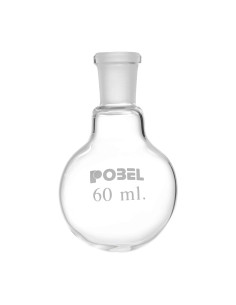
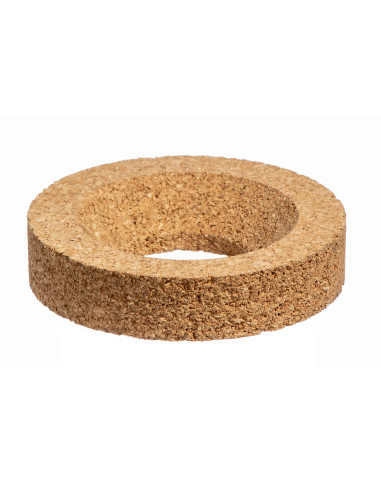
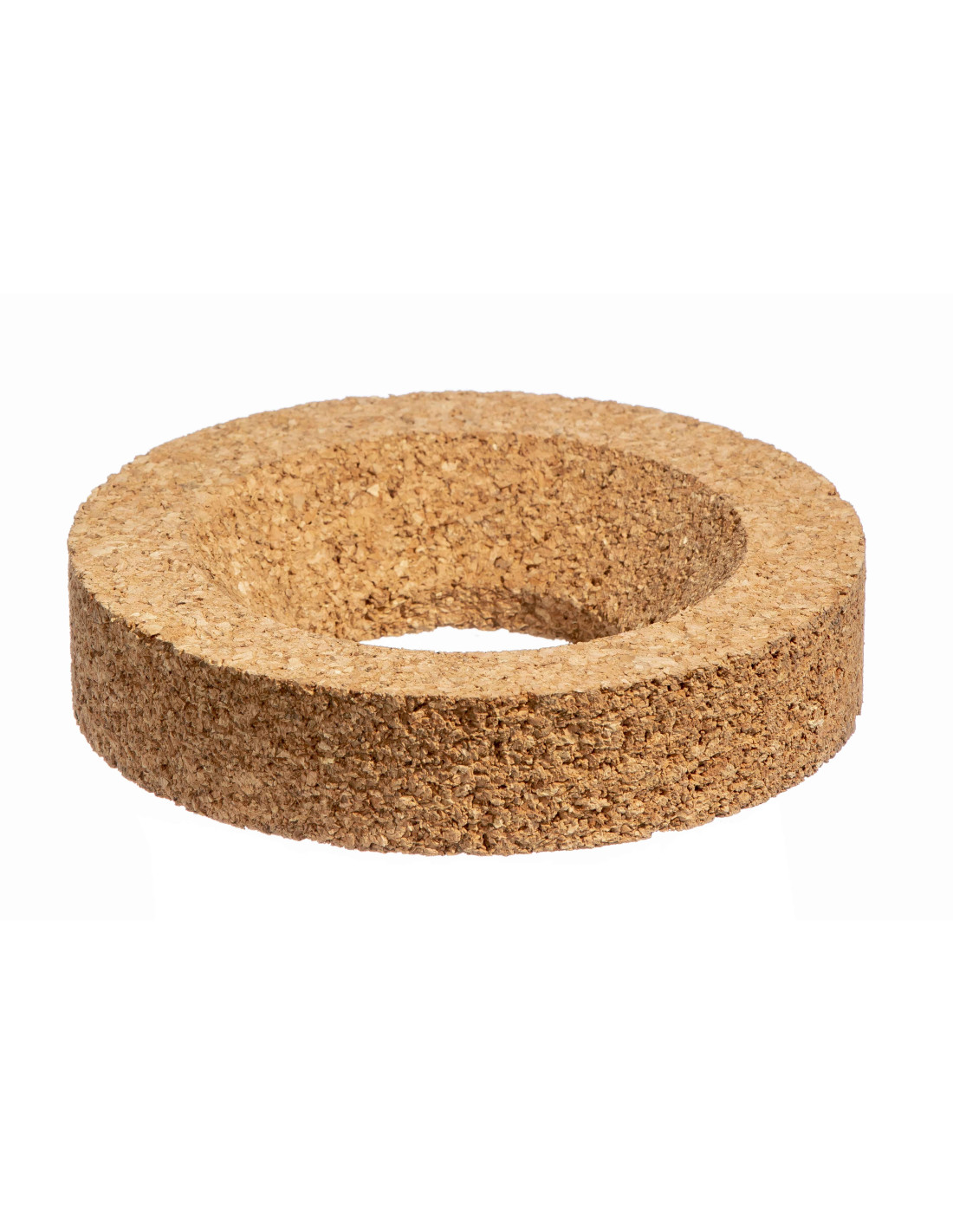
Cork ring for round bottom flasks
In research facilities, the stability of spherical-bottom vessels is an absolute priority to prevent the loss of valuable samples and avoid accidents. The cork ring for round bottom flasks is the simplest, most efficient, and most glassware-friendly solution to meet this need. Despite today’s technological sophistication, this natural component remains essential due to its unique physical properties: elasticity, thermal resistance, and a friction coefficient that ensures a secure grip.
Physical properties of this cork support
The use of cork in scientific environments is not a matter of tradition, but of applied physics. This material, obtained from cork oak bark, features an air-filled cellular structure that provides exceptional lightness and shock-absorbing capacity that no synthetic polymer has replicated with the same cost efficiency.
When a heavy vessel is placed on a cork ring for round bottom flasks, the material deforms slightly to conform to the glass curvature. This distributes the load uniformly, eliminating stress points that could cause fractures in borosilicate glass. In addition, its thermal behavior makes it an ideal insulator: it prevents heat from a flask removed from a heating mantle from dissipating abruptly upon contact with a cold benchtop surface, helping to prevent thermal shock.
Key applications of the cork ring for round bottom flasks
The versatility of this type of base allows integration across multiple chemical and biological workflows. Although its design may appear static, its value is highly practical:
-
Securing round bottom flasks: essential during reflux or synthesis setups, where vessels cannot stand upright on their own.
-
Support during weighing: stabilizes distillation flasks on balances when measuring the mass of liquid reagents.
-
Benchtop organization: provides a safe resting position for samples between reaction steps, improving order and safety in the work area.
-
Thermal insulation for hot vessels: acts as a protective barrier for laboratory furniture surfaces when handling elevated temperatures.
Compatibility with glassware and precision equipment
A quality cork ring for round bottom flasks should be selected according to the flask diameter it will support. In complex processes—such as purification using glass distillation systems—these supports serve as reliable aids to prevent boiling and receiving flasks from rolling on the benchtop.
Even in more specialized analytical techniques, such as density determinations or the use of wine flasks, the stability provided by cork is critical for accurate volumetric readings without oscillation risk. Its natural porosity also offers a secondary advantage: it absorbs small condensation droplets that may run down the glass, helping to keep the work area drier and safer.
Advantages versus rubber or plastic supports
Questions often arise about whether synthetic rings are a better choice. However, the cork ring for round bottom flasks remains the preferred option for several reasons:
-
Chemical resistance: unlike some plastics that can degrade or become tacky when exposed to organic solvent vapors, cork is notably inert.
-
Sustainability: it is a 100% natural, biodegradable, renewable product, aligned with modern laboratory “green chemistry” policies.
-
Thermal durability: it does not melt or release toxic fumes when in contact with glass at temperatures up to 150°C, which standard rubber does not always guarantee.
Selection criteria: sizes and dimensions
For a cork ring for round bottom flasks to perform effectively, correct fit is essential. A ring that is too small will leave the flask unstable at the top, while an oversized ring may allow the vessel bottom to contact the benchtop, negating both support and thermal insulation.
-
Small diameters (80–100 mm): ideal for 50 mL to 250 mL flasks, common in microscale work or analytical chemistry.
-
Medium diameters (120–140 mm): standard size for 500 mL to 1000 mL flasks used in conventional extractions and distillations.
-
Large diameters (160 mm or more): designed to support large volumes in reactors or multi-liter storage flasks.
Cork in liquid handling and volumetric work
In fluid handling, precision is non-negotiable. When pipettes are used to transfer reactive liquids into a round bottom flask, it is critical that the receiving vessel remains completely stable. A cork ring for round bottom flasks provides that non-slip base.
Even when working with high-technology instruments such as variable-volume micropipettes, it is often necessary to set the receiving vessel down securely while adjusting device parameters. In these cases, cork prevents accidental movement, protecting both the sample and surrounding instrumentation.
Do you need to equip your laboratory with high-quality accessories?
Scientific excellence depends on attention to the smallest details. At Pobel, we have been supplying everything your team needs to operate with maximum assurance for years. From complex glassware to essential support components, every product in our catalog meets stringent manufacturing standards.
Contact us for personalized technical guidance on our support solutions and professional glassware range.





 Quick delivery
 High quality
 Safe payment