


Your cart
There are no more items in your cart
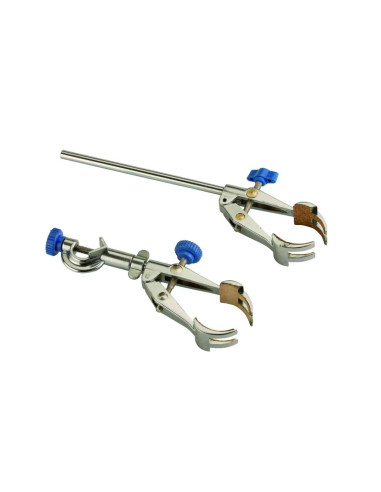
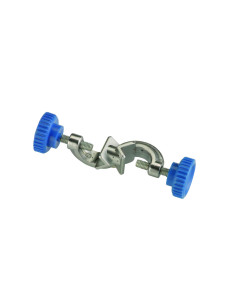
With cork pads.
| Ref. | For diameters up to (mm) | Features | Buy |
|---|---|---|---|
| Ref.: 10PINU0050 | For diameters up to (mm): 80 | Features: Without bosshead | |
| Ref.: 10PINU0051 | For diameters up to (mm): 80 | Features: With bosshead | |
|
Total:
0,0
All prices with tax excluded.
|
|||
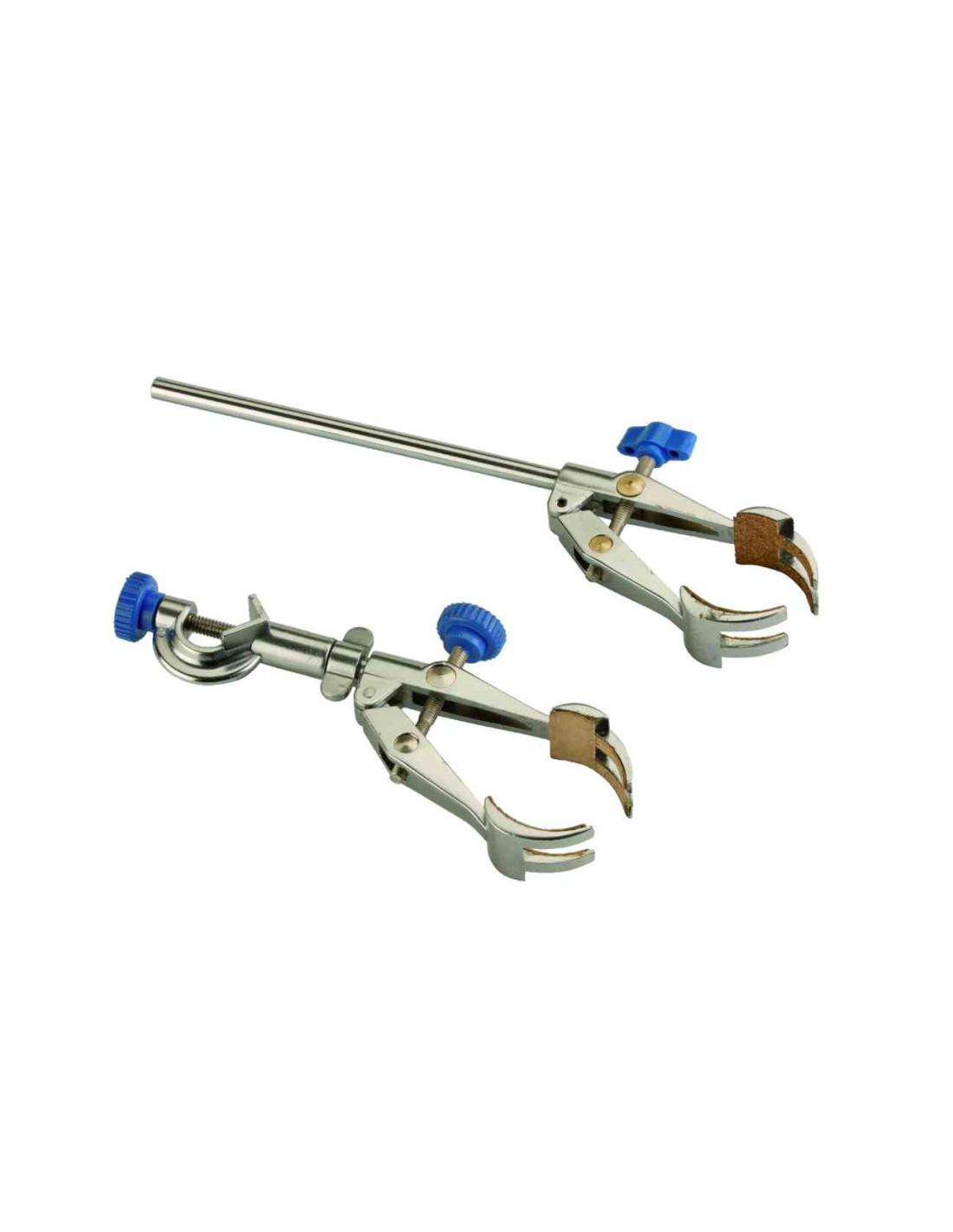
In the day-to-day work of a research center, the ability to hold vessels of different shapes and sizes with complete safety is what allows science to move forward without setbacks. multi-purpose clamps are positioned as the most versatile holding tool in the inventory, specifically designed to adapt to flask necks, condenser tubes, and burettes.
This instrument is not a simple metal accessory; it is a precision component that must balance the gripping force needed to prevent falls with enough delicacy not to fracture borosilicate glass.
The efficiency of this device lies in its mechanical architecture. Generally manufactured from durable metal alloys such as chrome-plated steel or aluminum, its structure allows multidirectional adjustment, making it easier to align equipment in complex assemblies.
multi-purpose clamps typically feature two or three fingers (jaws) that close via a micrometric screw mechanism. This configuration allows the operator to apply just the right pressure—vital when working with glassware that expands under heat. In addition, most models include protective tips, usually made of cork, rubber, or vinyl, with a dual function: increasing friction to prevent slipping and acting as a thermal and mechanical buffer between metal and glass.
When you configure a purification system, the stability of vertical components determines the success of the process. multi-purpose clamps are critical for:
Holding coolers and condensers: allowing water to circulate inside the apparatus without the weight of the liquid destabilizing the structure.
Securing round-bottom flasks: especially during boiling processes where vibrations could shift a poorly secured vessel.
Fixing thermometers and probes: ensuring the sensor remains in the center of the vapor or liquid flow without touching the vessel walls.
In glass distillation systems, using high-quality multi-purpose clamps ensures that ground-glass joints are not subjected to lateral stress, preventing gas leaks and torsion-related breakage.
Not all anchoring needs are the same, which is why the design of these tools has evolved in two main directions:
These are the most common for holding cylindrical objects with a constant diameter, such as burettes or test tubes. Their simple design provides a clear view of volumetric graduations, making accurate readings easier during a titration.
These offer superior versatility. With two fingers on one side and one on the opposite side, they can securely grip irregular shapes or large-diameter flask necks. They are the preferred choice for holding volumetric flasks or heavy vessels, as they distribute pressure across three contact points, increasing overall stability.
A clamp’s service life is directly related to its ability to resist corrosion. In an environment where acidic vapors and saline solutions are common, the use of stainless materials is essential.
Stainless steel: ideal for pharmaceutical laboratories where frequent sterilization is required and maximum resistance to oxidation is needed.
Zinc and chrome-plated alloys: offer an excellent price–performance ratio for teaching and general labs, providing an effective barrier against moisture.
PVC or silicone coatings: silicone-coated tips are especially valued in high-temperature processes, as they do not degrade or stick to hot glass, maintaining their elastic properties for longer.
Improper use of holding tools is a frequent cause of accidents. When using the clamp, it is essential not to overtighten the adjustment screw. Glass is an incompressible material and, under excessive mechanical pressure combined with heat, it can suddenly shatter.
A good practice is to always check the condition of the jaw coating. If the cork or plastic is worn, direct metal-to-glass contact increases the risk of scratches and fractures. In addition, you should always ensure the clamp is firmly attached to the universal stand using a double bosshead, keeping the setup’s center of gravity stable.
Your staff’s safety and the integrity of your instruments depend on the quality of the supports you use. At Pobel, we manufacture anchoring solutions designed to withstand the most demanding conditions—from contact with corrosive agents to sudden temperature changes. If you want to optimize your setups or need advice on which type of jaw is best suited to your analytical project, we’re here to guide you.
Contact us to receive detailed information about our catalog of professional instrumentation and accessories.
 Quick delivery
 High quality
 Safe payment