

Accuracy is one of the key factors in obtaining reliable laboratory results, and choosing the right volumetric glassware plays a fundamental role in achieving it. Pipettes, burettes, volumetric flasks and other measuring instruments are manufactured to different accuracy levels depending on their intended application. However, the designations Class A, Class B and Class AS often raise questions among laboratory professionals about which option best suits their needs.
Understanding the differences between these classifications helps laboratories select the appropriate equipment, improve analytical reliability and avoid measurement errors that may affect test results. In this article, we explain what each class means, their main characteristics and when each one should be used.
What Is Volumetric Glassware?
Volumetric glassware is specifically designed to measure, contain or deliver liquids with a defined degree of accuracy. Unlike general laboratory glassware, these instruments are manufactured and calibrated so that the indicated volume matches the actual volume within specified tolerances.
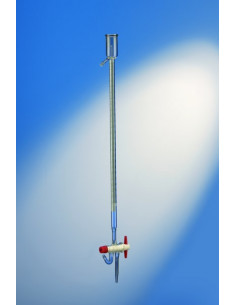
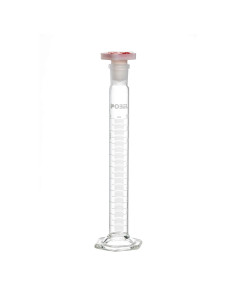
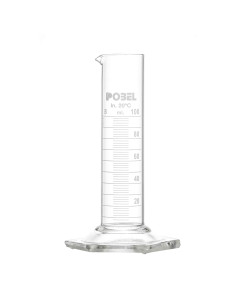
The most commonly used volumetric glassware includes volumetric pipettes, graduated pipettes, burettes, volumetric flasks and graduated cylinders, all of which are product categories available in the Pobel laboratory catalogue for a wide range of laboratory applications.
The level of accuracy required depends entirely on the application. Preparing a routine reagent requires different precision than performing a quantitative analysis or an analytical titration, where even a small measurement error can influence the final result.
What Do the Different Volumetric Classes Mean?
Volumetric glassware classes indicate the level of accuracy with which each instrument has been manufactured and calibrated. These classifications allow laboratory professionals to select the most suitable equipment according to the requirements of each procedure.
The three most common classifications are:
- Class A
- Class B
- Class AS
Although they perform the same basic function, they differ in manufacturing tolerances and intended applications.
Class A Volumetric Glassware
Class A volumetric glassware is intended for applications where maximum measurement accuracy is required. It is commonly used in quantitative analysis, pharmaceutical laboratories, chemical laboratories, quality control laboratories and research facilities.
Its main characteristics include:
- Manufactured to the strictest tolerances.
- Calibrated according to ISO standards.
- May be supplied with an individual calibration certificate, either issued by the manufacturer or according to ISO 17025, depending on the product available.
- High measurement accuracy.
For example, a 10 mL Class A volumetric pipette typically has an approximate tolerance of ±0.02 mL, providing excellent repeatability for analytical measurements.
This type of glassware is recommended whenever the reliability of analytical results depends directly on the accuracy of the delivered volume.
_1.jpg)
Class B Volumetric Glassware
Class B volumetric glassware has the same design and functionality as Class A instruments but is manufactured with less stringent tolerances.
Its main advantage is offering a practical balance between accuracy and cost for applications where maximum precision is not essential.
Its main features include:
- Tolerances approximately twice those of Class A.
- Generally lower purchase cost.
- Suitable for reagent preparation.
- Widely used in teaching laboratories and educational institutions.
- Recommended for routine laboratory work where small deviations do not significantly affect the final result.
Using the previous example, a 10 mL Class B pipette typically has an approximate tolerance of ±0.04 mL.
Although this difference may seem small, it can become significant in analytical procedures involving multiple measurements or calculations based on transferred volumes.
What Is Class AS Volumetric Glassware?
The designation Class AS often causes confusion because many users assume it offers greater accuracy than Class A. However, this is not the case.
The letter S stands for Speed.
Class AS glassware provides:
- The same accuracy as Class A.
- The same manufacturing tolerances.
- The same measurement uncertainty.
The only difference is that it has been designed with a shorter delivery time, allowing liquids to be discharged more quickly.
This feature is especially useful in: - Graduated pipettes.
- Burettes.
These instruments are frequently used in repetitive laboratory procedures where reducing delivery time improves efficiency without sacrificing measurement accuracy.
For example, a Class A burette may require approximately 30 seconds to deliver a specific volume, while an equivalent Class AS burette can complete the same delivery in approximately 15 to 20 seconds, maintaining identical accuracy.
Comparison Between Class A, Class B and Class AS
| Feature | Class A | Class B | Class AS |
|---|---|---|---|
| Accuracy | Very high | Moderate | Very high |
| Tolerances | Strictest | Approximately twice those of Class A | Same as Class A |
| Calibration | According to ISO standards | Manufacturer specifications | According to ISO standards |
| Delivery time | Standard | Standard | Faster |
| Typical applications | Quantitative analysis | Reagent preparation and education | Titrations and repetitive analytical work |
When Should You Choose Each Class?
The most suitable class depends entirely on the intended laboratory application.
Class A is the preferred choice whenever high measurement accuracy, traceability and analytical reliability are required. It is commonly used in pharmaceutical laboratories, accredited laboratories, research centres and quality control departments.
Class B is appropriate for routine laboratory work, reagent preparation, educational laboratories and procedures where slight measurement deviations are acceptable.
Class AS is particularly advantageous when performing repetitive measurements, especially with burettes and graduated pipettes, where faster liquid delivery increases productivity without compromising analytical performance.
The Importance of Calibration
The classification of volumetric glassware is closely related to its calibration process.
Whenever traceability is required, many laboratories request either individual calibration certificates or batch certificates for their volumetric glassware, an option available for this type of laboratory equipment in the Pobel catalogue.
Regular calibration and proper maintenance help preserve measurement accuracy throughout the service life of the equipment.
Best Practices for Maintaining Volumetric Accuracy
The accuracy of volumetric glassware depends not only on its classification but also on proper handling and maintenance.
Some recommended practices include:
- Clean the glassware using appropriate laboratory procedures.
- Avoid impacts and sudden temperature changes.
- Regularly inspect graduation marks and calibration lines.
- Use each instrument only for its intended purpose and volume range.
- Replace damaged or worn glassware to prevent measurement errors.
Common Mistakes When Selecting Volumetric Glassware
One common misconception is that every laboratory procedure requires Class A glassware. In reality, purchasing higher-precision equipment than necessary may increase costs without providing additional practical benefits.
Another frequent misunderstanding is assuming that Class AS is more accurate than Class A. In fact, both have exactly the same tolerances and measurement uncertainty, with the only difference being the faster delivery time.
Using Class B glassware for highly demanding quantitative analytical procedures can also introduce unnecessary measurement uncertainty.
Frequently Asked Questions
Is Class AS more accurate than Class A?
No. Both have identical tolerances and measurement accuracy. The only difference is the shorter delivery time of Class AS glassware.
Which class is recommended for quality control laboratories?
In most cases, Class A is recommended because of its stricter tolerances and the availability of calibration certificates.
Can Class B glassware be used for chemical analysis?
It depends on the required level of accuracy. For routine laboratory work it is often sufficient, whereas quantitative analytical procedures generally require Class A.
Are burettes available in Class AS?
Yes. Class AS is particularly common for burettes because faster liquid delivery improves laboratory efficiency while maintaining the same level of accuracy.
What types of volumetric glassware does Pobel offer?
The Pobel catalogue includes a wide range of volumetric laboratory products, including graduated pipettes, volumetric pipettes, burettes, volumetric flasks and graduated cylinders, suitable for different laboratory applications.
Related products