


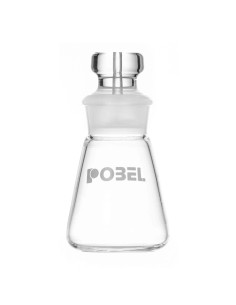
PYCNOMETERS HUBBARD
Hubbard Pycnometers for Measuring Density and Specific Gravity
Hubbard pycnometers are laboratory instruments used to determine density or specific gravity through a pycnometric procedure. Their design allows them to be used with both solid and liquid samples, depending on the test method applied.
At Pobel, you can find the ASTM Hubbard-Carmick pycnometer, made from borosilicate glass and with a capacity of 25 ml. This model is designed in accordance with ASTM D70.
This model is part of our range of laboratory pycnometers for density determination.
What Is a Hubbard Pycnometer?
A Hubbard pycnometer is a laboratory vessel designed to determine density or specific gravity through a procedure based on the sample’s mass and volume.
The Hubbard-Carmick model available from Pobel can be used with solids or liquids and is made from borosilicate glass.
Its use must follow the relevant analytical method, as the weighing, filling and sample conditioning procedures depend on the material being analysed.
What Is a Hubbard-Carmick Pycnometer Used For?
A Hubbard-Carmick pycnometer is used to determine density or specific gravity by pycnometry.
Pobel’s product specification explicitly states that this model can be used with solids or liquids. It is also manufactured in accordance with ASTM D70, a standard relating to the determination of the density of semisolid bituminous materials using a pycnometer.
It is therefore particularly relevant to procedures where density must be determined according to a standardised method.
Hubbard Pycnometers and ASTM D70
The model sold by Pobel is manufactured in accordance with ASTM D70.
This standard specifies a method for determining the density and relative density of semisolid bituminous materials using a pycnometer.
ASTM D70 covers this type of determination for materials such as semisolid asphalt binders and certain soft pitches, within the scope and conditions specified by the method.
Laboratories working to this standard must follow the complete ASTM procedure and use equipment compatible with its requirements.
Hubbard Pycnometers for Solids and Liquids
One of the features specified by Pobel for its Hubbard-Carmick pycnometer is that it can be used with solids or liquids.
The general principle of pycnometry involves relating the sample’s mass to a volume that is known or determined through the test procedure.
The specific measurement procedure varies according to the nature of the sample, so the conditions specified by the method used must be followed.
25 ml Hubbard Pycnometer
The Hubbard-Carmick model available from Pobel has a capacity of 25 ml.
A pycnometer’s capacity should be selected according to the test procedure and the amount of sample available.
In this category, Pobel currently offers a 25 ml model specifically associated with the Hubbard-Carmick design in accordance with ASTM D70.
Borosilicate Glass Pycnometer
Pobel’s Hubbard-Carmick pycnometer is made from borosilicate glass.
The material of construction is one of the technical specifications to consider when selecting laboratory instruments, particularly when working with standardised procedures.
In this case, Pobel explicitly specifies borosilicate glass for the available model.
Density and Specific Gravity: What Is the Difference?
Density and specific gravity are related quantities, but they are not identical.
Density relates a substance’s mass to the volume it occupies. Specific gravity, on the other hand, expresses the ratio between the sample’s density and the density of a reference substance under specified conditions.
Pobel’s Hubbard-Carmick pycnometer is intended for both determinations, depending on the procedure applied.
Hubbard Pycnometer or Gay-Lussac Pycnometer
Both instruments are used for density determination, but they have different designs and follow different methods.
- Hubbard-Carmick pycnometer: specified by Pobel for solids or liquids, with a capacity of 25 ml and manufactured in accordance with ASTM D70.
- Gay-Lussac pycnometer: primarily intended for determining the density of liquids using a vessel with a defined volume and a capillary stopper.
If you need to work specifically with liquids using the latter design, explore our Gay-Lussac pycnometers.
How to Use a Hubbard Pycnometer
The procedure must always follow the relevant analytical method. In standardised tests such as ASTM D70, preparation, weighing and temperature conditions form part of the procedure itself.
In general, when working with a pycnometer, factors to control include:
- Cleaning and conditioning the vessel.
- Preparing the sample correctly.
- Performing the weighings required by the method.
- Filling the pycnometer correctly.
- Ensuring the absence of bubbles or voids not accounted for by the procedure.
- Maintaining the temperature specified by the test method.
Obtaining valid results requires following the standardised or internal procedure used by the laboratory.
How to Choose a Hubbard Pycnometer
Before selecting a Hubbard pycnometer, check that its characteristics are compatible with the method you need to apply.
For the model available from Pobel, consider:
- Capacity: 25 ml.
- Material: borosilicate glass.
- Sample type: solids or liquids.
- Quantity to be determined: density or specific gravity.
- Standard: ASTM D70.
If the procedure requires a different design, capacity or determination method, consider other pycnometer ranges.
Frequently Asked Questions About Hubbard Pycnometers
What Is a Hubbard Pycnometer Used For?
It is used to determine density or specific gravity through a pycnometric procedure.
Can It Be Used with Solids and Liquids?
Yes. Pobel specifies that its Hubbard-Carmick pycnometer is intended for use with solids or liquids.
What Is the Capacity of Pobel’s Model?
The available model has a capacity of 25 ml.
What Material Is It Made From?
It is made from borosilicate glass.
Which Standard Does It Comply With?
Pobel’s Hubbard-Carmick pycnometer is manufactured in accordance with ASTM D70.
What Does ASTM D70 Determine?
ASTM D70 specifies a method for determining the density and relative density of semisolid bituminous materials using a pycnometer.
Find the Right Hubbard Pycnometer for Your Laboratory
Explore our Hubbard-Carmick pycnometer for determining density or specific gravity with solids and liquids. If you need to confirm the instrument’s compatibility with your test method or have any technical questions, contact the Pobel team for advice.
 Quick delivery
 High quality
 Safe payment