


PYCNOMETERS GAY-LUSSAC
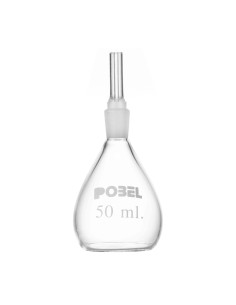
Gay-Lussac Pycnometers for Measuring Liquid Density
A Gay-Lussac pycnometer is a laboratory instrument used to determine the density of liquids from a known volume and the mass of the sample contained in the vessel.
It is one of the classic pycnometer designs and features a closure system that allows the volume of liquid contained in the vessel to be precisely set. At Pobel, you can find Gay-Lussac models with a capillary stopper and versions incorporating a thermometer.
This product family is part of our range of laboratory pycnometers for density determination.
What Is a Gay-Lussac Pycnometer?
A Gay-Lussac pycnometer is a laboratory vessel designed to hold a defined volume of liquid. By weighing the empty pycnometer and then weighing it filled with the sample, the mass of the liquid contained in that volume can be determined.
The classic model incorporates a capillary stopper that allows the liquid level to be adjusted so that the volume contained is defined by the instrument’s design.
Pycnometers are widely used to determine the density of liquids. ISO 3507 specifies requirements for different types of laboratory pycnometers intended for this purpose.
What Is a Gay-Lussac Pycnometer Used For?
A Gay-Lussac pycnometer is used to determine the density of liquids through a gravimetric procedure.
Unlike a hydrometer, which measures by flotation, a pycnometer allows density to be calculated from the relationship between the sample’s mass and the known volume of the vessel.
This type of instrument can be used in laboratory procedures that require a controlled volume and weighing to determine the sample’s density.
How Does a Gay-Lussac Pycnometer Work?
The measurement principle involves knowing the volume of the vessel and determining the mass of the liquid it contains by weighing.
In general, the procedure requires weighing the pycnometer under the conditions specified by the method and then comparing this with the weight of the instrument filled with the sample.
The difference between the two weighings gives the mass of the liquid. Its density can then be determined from this value and the corresponding volume.
The exact procedure must always follow the analytical method used, particularly when factors such as temperature, filling or the presence of bubbles need to be controlled.
Gay-Lussac Pycnometers with a Capillary Stopper
Pobel offers a Gay-Lussac pycnometer with a 10/19 ground-glass capillary stopper, available calibrated or uncalibrated.
The available capacities are:
- 5 ml.
- 10 ml.
- 25 ml.
- 50 ml.
- 100 ml.
All these capacities are available in uncalibrated versions and calibrated versions with an individual certificate.
What Is the Capillary Stopper Used For?
The capillary stopper forms part of the Gay-Lussac pycnometer’s design and allows the liquid contents to be adjusted to the instrument’s intended volume.
When the stopper is inserted, excess liquid can flow through the capillary, leaving the appropriate volume inside the pycnometer.
This design enables density determination to be carried out with a controlled volume before weighing.
Gay-Lussac Pycnometers with a Thermometer
Pobel also offers a Gay-Lussac pycnometer with a thermometer, designed for density determinations that require temperature monitoring during the test.
This model features:
- A thermometer with a range of 10 to 35 °C.
- 0.2 °C scale divisions.
- A 10/19 ground-glass joint.
- Calibrated versions with an individual certificate.
The available capacities for this configuration are:
- 10 ml.
- 25 ml.
- 50 ml.
- 100 ml.
Why Is Temperature Control Important?
The density of liquids can change with temperature. Temperature is therefore a relevant parameter when determining density by pycnometry.
The Gay-Lussac model with a thermometer allows the temperature to be checked during the test using its integrated thermometer with a range of 10 to 35 °C.
Results must always be interpreted according to the conditions specified by the analytical method used.
Calibrated and Uncalibrated Gay-Lussac Pycnometers
Pobel offers various Gay-Lussac pycnometer models with and without calibration.
The capillary stopper model is available in calibrated versions with an individual certificate in capacities of 5, 10, 25, 50 and 100 ml.
The thermometer model is also available in calibrated versions with an individual certificate in capacities of 10, 25, 50 and 100 ml.
Before selecting a model, check whether the laboratory’s working procedure or quality system requires a calibrated instrument and associated individual documentation.
Gay-Lussac Pycnometer or Hydrometer: What Is the Difference?
Both instruments can be used to determine density, but they operate using different procedures.
- Gay-Lussac pycnometer: determines density from the mass corresponding to a known volume.
- Hydrometer: measures using the instrument’s floating position in the liquid.
If you need to measure by flotation, explore our range of laboratory hydrometers.
How to Use a Gay-Lussac Pycnometer
The specific procedure depends on the test method, but determining density with a Gay-Lussac pycnometer requires careful control of both filling and weighing.
Factors to consider include:
- Using a clean pycnometer.
- Performing weighings according to the procedure used.
- Filling the vessel correctly.
- Inserting the capillary stopper according to the instrument’s design.
- Avoiding bubbles that could alter the volume of liquid contained.
- Controlling temperature when it forms part of the test conditions.
In versions with a thermometer, the temperature can be checked directly during measurement.
Which Gay-Lussac Pycnometer Capacity Should You Choose?
The capacity should be selected according to the laboratory procedure and the amount of sample available.
Pobel’s capillary stopper models are available in 5, 10, 25, 50 and 100 ml, while versions with a thermometer are available in 10, 25, 50 and 100 ml.
In addition to capacity, consider:
- Calibration requirements.
- The need for an individual certificate.
- The need to monitor temperature during the test.
- The analytical procedure used.
Frequently Asked Questions About Gay-Lussac Pycnometers
What Is a Gay-Lussac Pycnometer Used For?
It is used to determine the density of liquids from the mass of a known volume of sample.
What Capacities Are Available?
The capillary stopper model is available in 5, 10, 25, 50 and 100 ml. The version with a thermometer is available in 10, 25, 50 and 100 ml.
What Ground-Glass Joint Size Do Pobel Gay-Lussac Pycnometers Have?
Both the capillary stopper model and the version with a thermometer use a 10/19 ground-glass joint.
Can They Be Purchased Calibrated?
Yes. Pobel offers calibrated models supplied with an individual certificate.
What Features Does the Thermometer Model Have?
It incorporates a thermometer with a range of 10 to 35 °C and 0.2 °C scale divisions.
Are Gay-Lussac Pycnometers and Hydrometers the Same?
No. Both can determine density, but a pycnometer uses a known volume and weighing, while a conventional hydrometer works by flotation.
Find the Right Gay-Lussac Pycnometer
Explore our range of Gay-Lussac pycnometers and select the capacity, configuration and calibration option that best suit your laboratory procedure. If you are unsure which model you need, contact the Pobel team for advice.
 Quick delivery
 High quality
 Safe payment